To my Dose Registry Clients and Friends,
The DIR recently announced changes in how the NRDR maps combination CT studies. In my opinion, this is one of the most significant and welcome changes to the DIR in years. See the link immediately below.
The article explains changes to how the DIR records and processes combination exams — exams that include scans across multiple anatomic regions. However, the change has immediate and significant exam mapping implications – see The Challenge Section below.
Combination Studies: Many sites perform studies where the patient is registered once on the scanner and multiple body areas are scanned under that same registration. The combined exam is then sent to the DIR as a single study entry. For example, a Neck / Chest / Abdomen / Pelvis with Contrast exam may be transmitted to the DIR as one study. In many cases, that study is then mapped to a single RPID, such as CT Neck w Contrast, even though the study actually includes the chest, abdomen, and pelvis. When that happens, the reported dose for the “Neck” study becomes the sum of all scans performed, which can significantly inflate the reported dose for that RPID.
Note: There are workflows that can prevent this, such as registering the patient separately for each scan or using post-processing tools to split studies after acquisition. However, these approaches require additional workflow steps and effort, and many facilities do not implement them. As a result, combination studies frequently enter the DIR as single exams, which distorts the dose data for the affected RPIDs.
To address this issue, the DIR is now identifying exams that appear to contain multiple distinct studies (using information such as scout images, acquisition protocols, and scan structure) by flagging them with a “cmbX:” prefix in the DIR. This allows the DIR to segregate these studies so they no longer inflate the dose statistics for the single-study RPIDs to which they would historically have been mapped. Below are examples of some actual cmbX combinations now appearing in one site’s Exam Name Mapping file.
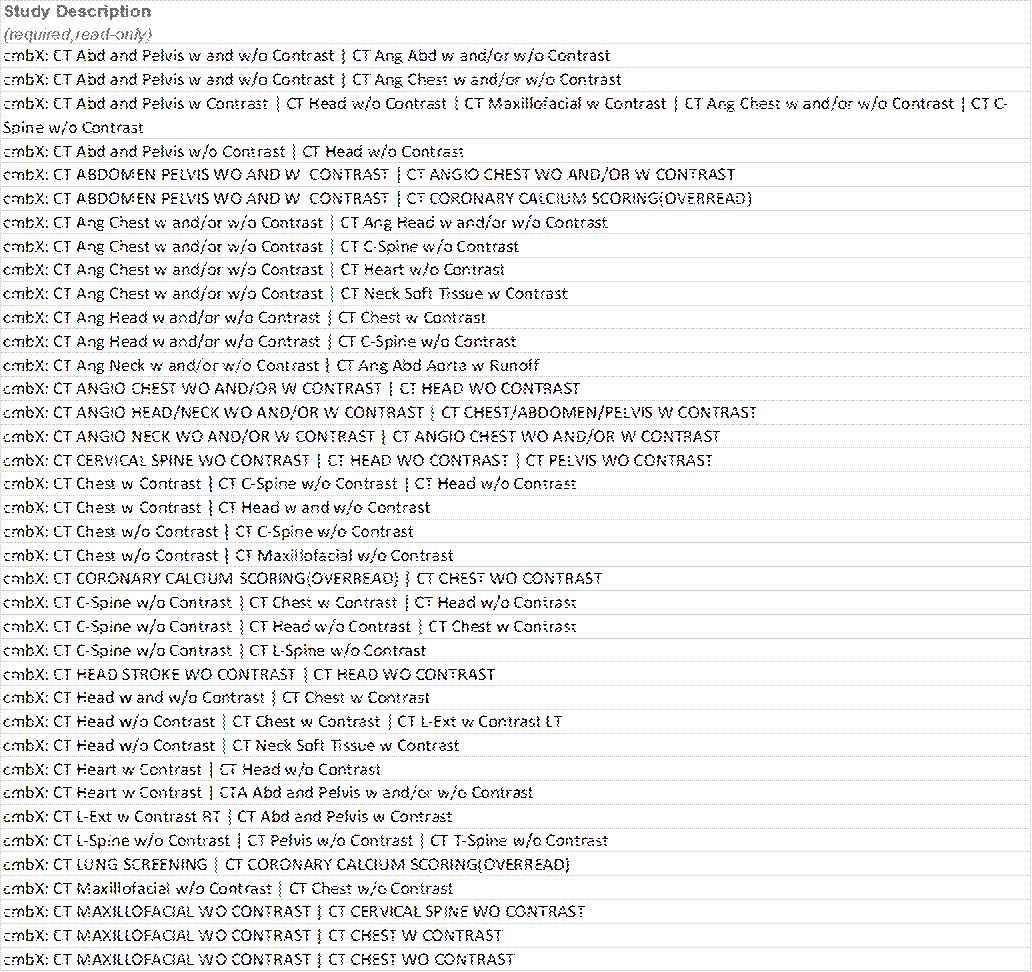
The Challenge: If you review the Unmapped Exams section of your Exam Name Mapping table, you will likely now see many cmbX studies listed as unmapped. At one site I recently reviewed, this change resulted in over 600 unmapped exams. Others are seeing 200 or more. These exams must now be reviewed and mapped using the DIR Exam Name Mapping process.
RadLex does include some RPIDs representing combinations of studies, but not all combinations exist, and even when they do, finding the correct RPID can be difficult. If you thought exam name mapping was tedious before, mapping the new cmbX studies will be even more challenging.
The Good News: I’m supporting my Dose Registry Support Services clients by helping them with their mappings. I will also continue monitoring DIR changes like this and will notify you if additional updates require action on your part.
If you have any questions, including how to map cmbX: files that have no related RPIDs, or need Dose Index Registry support, please contact me.
Best wishes,
Mike Bohl
 Dose Registry Support Services